
Why Marche could be Italy’s next great cycling destination
As Tirreno-Adriatico rolls through the region, Marche is using one of cycling’s biggest stages to show why its quiet roads, coastal views and mountain trails deserve a place on every rider’s wish list.
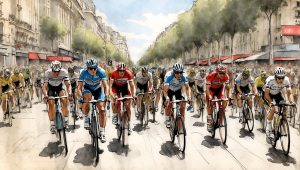
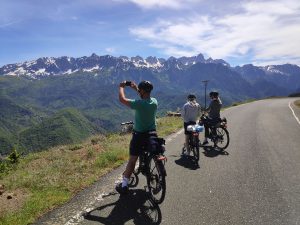
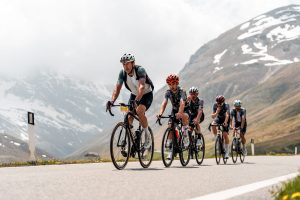
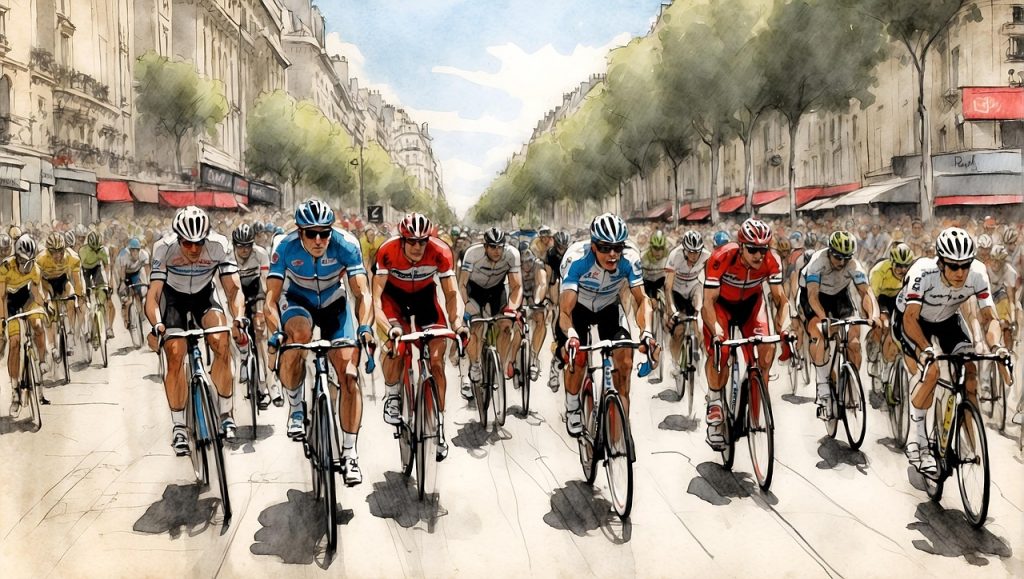
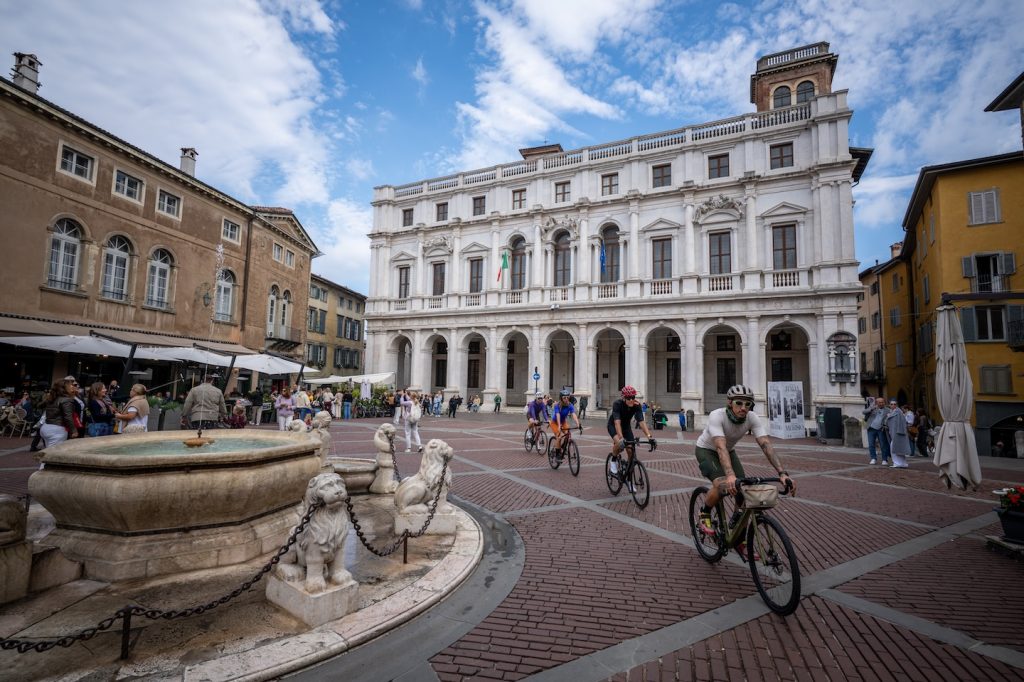
When the peloton races across Marche in the closing stages of Tirreno-Adriatico, television viewers will see more than a battle for the overall win. They will get a sweeping introduction to one of Italy’s most appealing and still relatively under-the-radar cycling regions. Hills folded into the horizon, stone villages perched above the valleys, and roads that seem made for long days in the saddle all help explain why Marche is pushing hard to become a leading destination for cycle tourism.
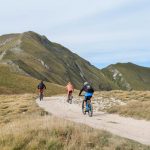
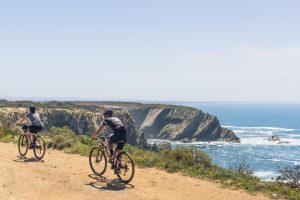
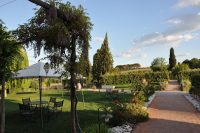
Stretching from the Adriatic coast to the Apennines, Marche offers the kind of variety that makes a cycling holiday easy to build around. Riders can roll along seaside roads in the morning, head inland through vineyards and olive groves by lunchtime, and finish the day climbing into quieter mountain landscapes. According to the regional tourism agency, that mix of scenery, culture and relatively gentle terrain is helping Marche attract a growing audience of domestic and international visitors looking for a more authentic and sustainable way to travel.
That is part of the reason the region is placing such emphasis on cycling right now. Francesco Acquaroli, President of the Marche Region, says the global TV images from Tirreno-Adriatico offer the chance to present Marche as a destination with nature, culture, hospitality and quality of life all wrapped into one. It is not just about elite sport, but about showing how the same roads and landscapes can be experienced at a slower pace by everyday riders.
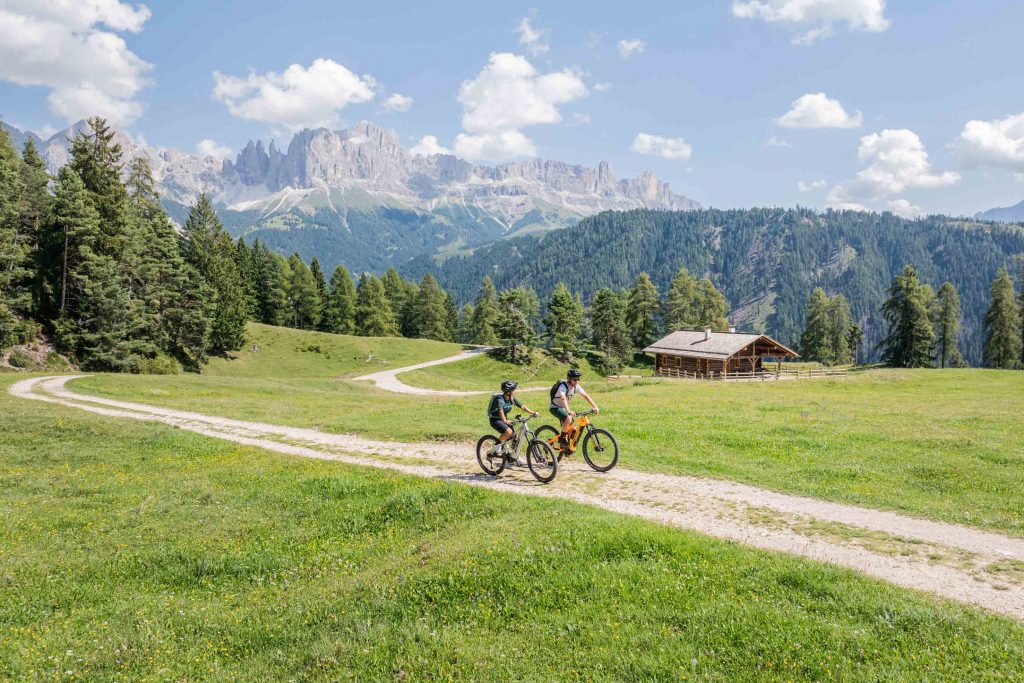
For anyone planning a trip, the appeal lies in the breadth of riding on offer. Marche is not simply a road cycling destination, even if smooth backroads and rolling terrain make it a natural fit for endurance miles. The region also pitches itself as ideal for gravel riders, mountain bikers and more casual touring cyclists, with routes that pass through historic centres, natural parks and small villages where food and wine are very much part of the experience.
Among the standout routes is the Ciclovia delle Abbazie, a 69 kilometre ride that follows the Chienti River inland on cycle paths and links a series of important abbeys. It is as much a cultural ride as a sporting one, threading Romanesque heritage through a landscape shaped by spirituality and agriculture. For riders who like their miles with a side of history, it sounds like one of the region’s most distinctive options.
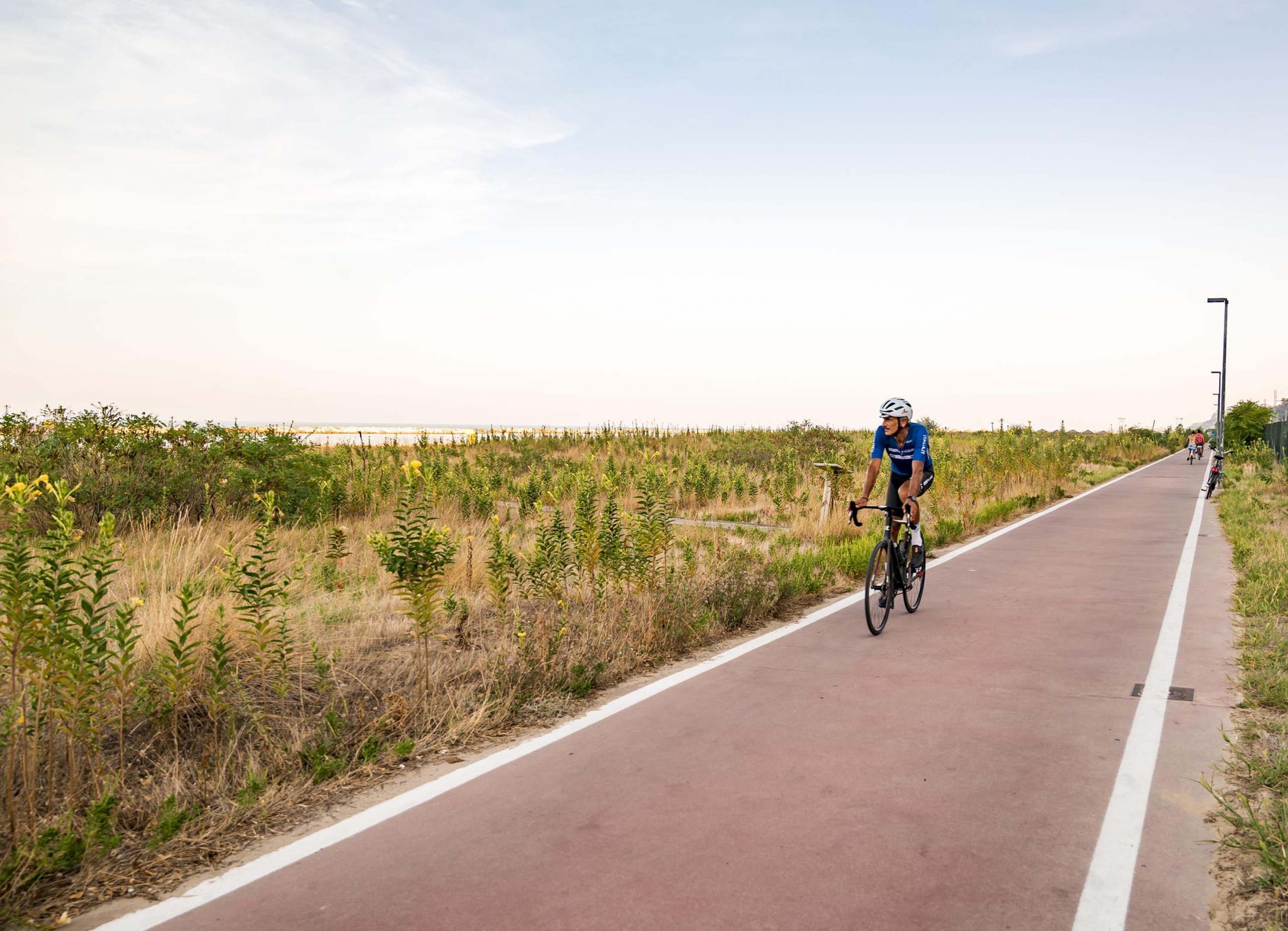
Then there is the Ciclovia Adriatica, which runs north to south through Marche with the sea on one side and the region’s trademark rolling hills on the other. It is an itinerary that captures the contrast that makes this part of Italy so attractive by bike: beaches and coastlines close enough to the uplands that each day’s route can feel different without requiring a major transfer.
For those wanting something longer and more immersive, the Ciclo Appenninica Alte Marche covers roughly 200 kilometres through the northern Apennines and links nine municipalities including Acqualagna, Apecchio, Cagli, Cantiano and Frontone. It promises a deeper ride into the interior, where culture, local traditions and mountain scenery take over from the better-known coastal postcard views.
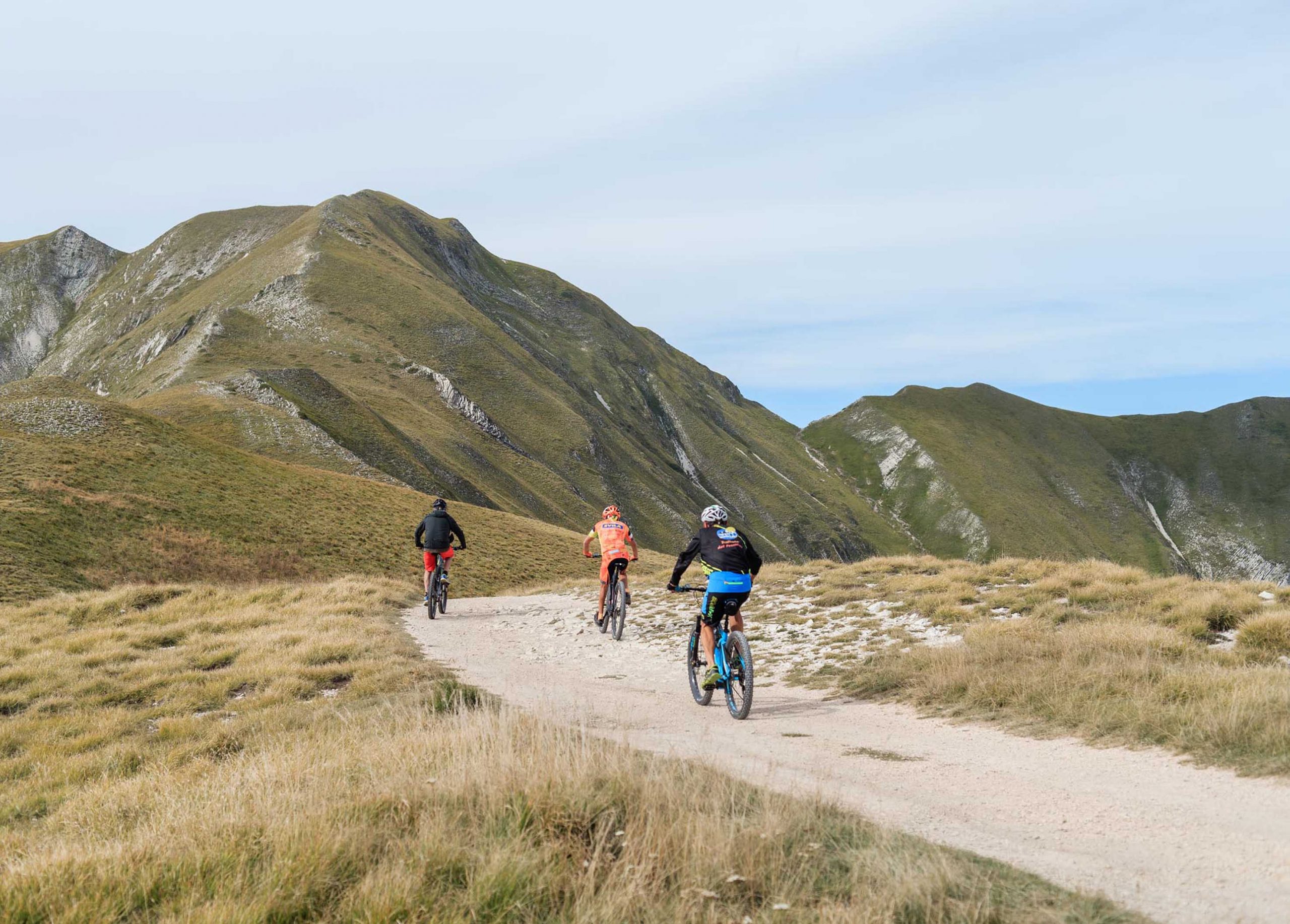
Mountain bikers have their own flagship challenge in the Grande Anello dei Sibillini, a route of around 180 kilometres around the Monti Sibillini National Park. The course mainly uses forest tracks and low-traffic paved roads, with stage options that can be adapted according to fitness and ambition. For riders who prefer their adventures wild, remote and a little more rugged, this looks like one of the jewels in Marche’s crown.
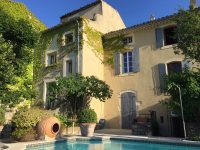
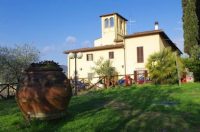
Importantly, the region is not relying on scenery alone. The press material highlights a growing network of bike-friendly accommodation, specialist guides, rental services, mechanical support, sports associations and local authorities working together to make cycling trips easier to organise. That kind of infrastructure matters. Great roads can spark interest, but it is the practical support around them that turns a promising destination into one riders recommend to their friends.
Marche is also betting on the marketing power of major races. The region says Tirreno-Adriatico brings significant international exposure, with 170 accredited media outlets, 13,000 online articles published in 69 countries, 2,843 hours of television coverage and an estimated audience of 36 million viewers. It is a substantial shop window, and one that helps explain why tourism boards increasingly see elite racing as a gateway to long-term visitor growth.
That spotlight will return in May when the eighth stage of the 2026 Giro d’Italia finishes in Fermo on Saturday 16 May. Marina Santucci, Director of ATIM, says the region sees cycling as both a top-level sporting platform and a way of strengthening Marche’s international profile as a destination for travellers who want to explore by bike. With the Giro’s worldwide reach and the economic impact associated with the race, it is easy to see why.
For riders looking beyond Italy’s best-known cycling hotspots, Marche makes a compelling case. It has the coast, the climbs, the culture and, crucially, roads that still feel like they belong to the rider rather than the traffic. This week the professionals are racing through it. The bigger story may be how many people decide to come back and ride it for themselves.